Virginia hosts several hundred data centers — the most in the global market. Data centers are already affecting Virginians in many ways — driving up electricity bills, saddling communities with noise and harmful air pollution from diesel generators, and using significant quantities of public water resources. Without substantial new regulations, data centers will continue to pose significant risks to Virginia communities.
The industry’s unchecked growth means we need aggressive, substantial action now. Virginia must place a moratorium on approving new data centers until decisionmakers implement protections to safeguard our communities, wallets, air, water, and land.
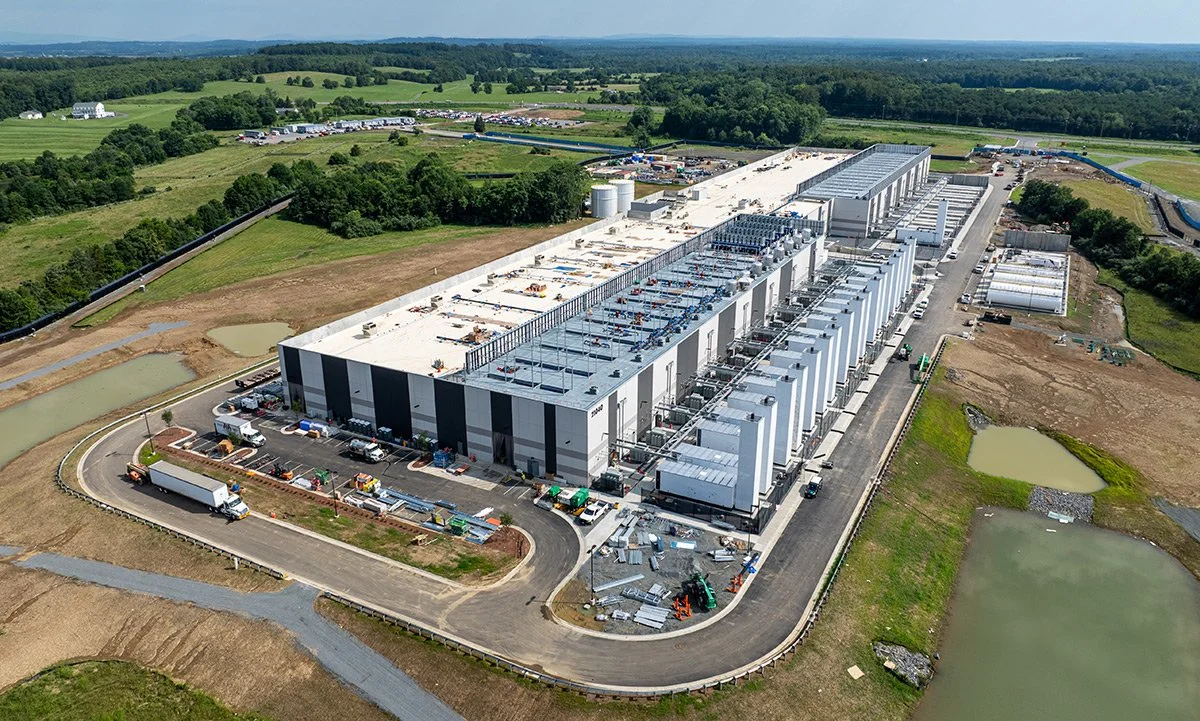
The Marvell data center, currently under construction in the rural community of Stevensburg in Culpeper County, Virginia. The center is just a part of a data center boom in Culpeper County. Photo by Hugh Kenny, Piedmont Environmental Council
Pause Data Centers to…
-

Protect Our Communities
Data centers must be good neighbors, participate in a full public hearing process–eliminating by-right approval–and disclose anticipated impacts on communities before they’re approved.
-

Protect Our Wallets
Data centers must be made wholly responsible for paying any costs associated with their growing energy demand and should not be given lucrative tax breaks that saddle taxpayers with additional costs, absent significant reforms.
-

Protect Our Air
Data centers must work toward achieving 100% clean energy, limit the use of dirty diesel backup generators, and fully disclose their emissions to state regulators.
-

Protect Our Water
Data centers must minimize their water use and offset any local water resources they use for cooling.
-

Protect Our Land
Data centers must avoid disrupting sensitive sites like prime agricultural land, wetlands, forests, floodplains, places of historical and cultural significance, and high-value ecological habitats.

An aerial view of a data center located next to a residential community inside "Data Center Alley" in Ashburn, Virginia. Northern Virginia is the largest data center market in the world. Photo by Hugh Kenny, Piedmont Environmental Council
Protect Our Communities
Data centers must be good neighbors and responsibly sited, protecting the human and environmental health of the communities they impact.
For larger projects, data centers must undergo a full public hearing process, eliminating so-called “by right” approval.
Developers cannot hide behind non-disclosure agreements and must fully disclose data centers’ anticipated effects on communities, natural resources, air quality, and other associated impacts.
Virginia must accelerate its noise regulation designed for data centers, and promulgate a light pollution regulation.
Environmental justice concerns must be top of mind during development. Data centers should not receive financial incentives for locating in historically disadvantaged communities.
New standards on grid reliability must be developed to prevent data center-associated blackouts or excessive grid strain.

Protect Our Wallets
Homeowners, small businesses, churches, schools, and other non-data center utility customers must be shielded from any data center-related increases in electricity costs, including increased infrastructure, market, health, and environmental costs.
New standards on interconnection to the energy grid should be developed to protect our communities and Virginia’s clean energy transition.
Lawmakers must explore changes to current state-level tax exemptions to avoid giveaways to a billion-dollar industry absent substantial reforms.
Data centers must commit to achieving 100% clean energy and cannot rely on harmful “behind the meter” or onsite fossil fuel power sources.
New data centers must use backup generation that uses clean energy and does not contribute to local air pollution.
Air permits must be strengthened and the use of polluting backup generators must be limited.
For larger projects, there must be a detailed health analysis conducted, including on cumulative impacts – the combined, long-term effects of environmental stressors.
Data centers must report diesel backup generator use to the Virginia Department of Environmental Quality (DEQ), which will alert the public and be able to restrict diesel use during air quality emergencies.
The cumulative impact of any on-site or behind-the-meter polluting power sources must be subject to the Regional Greenhouse Gas Initiative, including at existing facilities.
Emissions monitoring by data centers must be mandatory, continuous, regularly reported electronically to DEQ, and publicly available.
State agencies must undertake forward-looking modeling that projects air quality impacts and trends.
Protect Our Air

Protect Our Water
The public’s water needs must take precedence over data center needs – including in water scarcity areas and during drought events.
Data centers must minimize their water usage and consumption for cooling and power generation needs.
Data centers must replenish the water resources they use.
Data centers must treat their wastewater to remove harmful pollution, bacteria, and toxins and design sites to reduce stormwater discharges.
Protect Our Land

Data centers must avoid negative impacts to sensitive sites like agricultural land, wetlands, forests, floodplains, places of historical and cultural significance, and high-value ecological habitats.
Data centers should not be sited close to schools, playgrounds, community centers, or daycare facilities.
Data center projects must utilize sites that are next to support infrastructure like water collection, cooling, and energy facilities.
The industry must fully compensate local communities that host transmission and pipeline infrastructure primarily built to accommodate data centers.
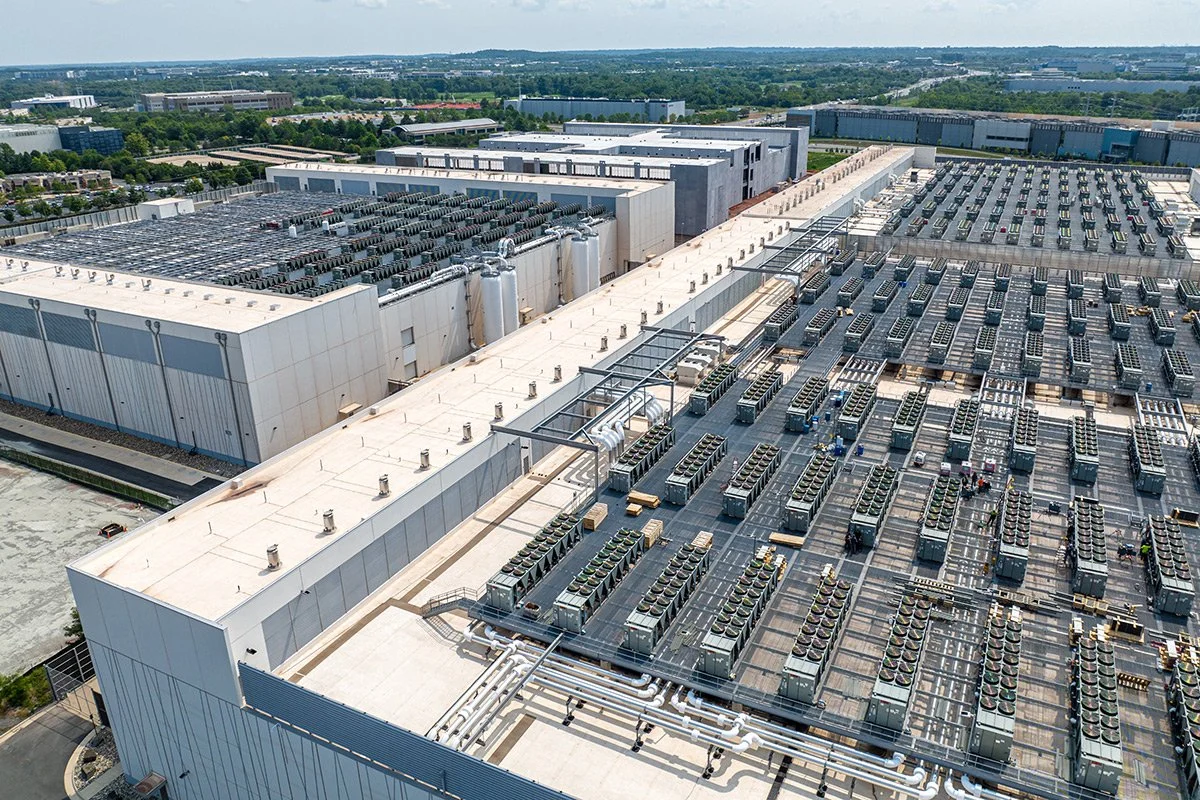
A massive data center in Loudoun County, Virginia. Photo by Hugh Kenny, Piedmont Environmental Council